

Area plumbers outline professional standards
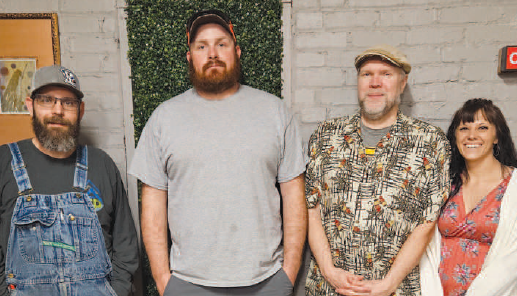
Editor’s note: This is the final of a two-part series highlighting a “Ray County Voices” podcast episode featuring local plumbing professionals. Part One covered common plumbing issues and maintenance, while Part Two explores training, qualifications and hiring considerations.
From training requirements to licensing and experience, local plumbing professionals are sharing things homeowners should consider when hiring a professional.
That information was shared during a recent episode of the “Ray County Voices” podcast, cohosted by Shawn Roney. The episode, part of the “Your Money Your Mic” segment, featured Zac Gregory of Total Plumbing KC and Dale Askamit of Big Country Plumbing, who continued their discussion by focusing on their training and business practices.
Gregory, founder of Total Plumbing KC in 2020, and Askamit, who started Big Country Plumbing in 2024, both serve communities across the region and emphasized the importance of experience and proper training within the trade.
The path into the trade for these plumbers began in different ways, but each said hands on experience played a key role early on.
“My dad was a plumber, so I started helping him when I was a kid, so I could get gas money to go to school,” said Askamit.
Gregory’s introduction to plumbing came after he initially pursued a career as a mechanic, a path influenced by his family. He later found plumbing to be a better fit and ultimately chose to make the transition into the trade.
Early experiences helped shape their understanding of the trade and reinforced the importance of learning through real world work.
The pair agreed training in the field played a significant role in developing the skills required for the trade, though their experiences differed in structure and approach.
Askamit noted his training was primarily hands on while working alongside his father and learning through direct experience rather than formal classroom instruction.
“I wasn’t a sit-down learner,” explained Askamit. “I was more of a hands-on learner and he just threw me to the wolves and told me to figure it out. At some point, it switches from training to just instincts kicking in.”
Gregory said his experience included both hands-on work and formal instruction through union training, with classroom learning complementing daily fieldwork.
“I was in the union, so they require it and actually make you go to class,” stated Gregory. “It’s kind of like going to class for something you already worked on all day, then going back at the end of the day to learn what you just did.”
He used that opportunity to earn multiple certifications across different areas of plumbing, including backflow prevention, septic systems, medical gas and welding, along with obtaining a master plumber’s license in both Kansas and Missouri.
Askamit currently holds a master plumber’s license and is working toward additional certification, including backflow.
Both plumbers noted homeowners should take time to verify qualifications when selecting a professional, emphasizing the importance of licensing and insurance.
Gregory pointed to proper credentials as a key consideration when hiring a plumber.
“If you hire any plumber, make sure that they’re licensed,” said Gregory. “It doesn’t have to be us, but it should be a licensed and insured plumber.”
He added homeowners can verify a plumber’s licensing through local government offices, noting many city halls maintain lists of approved or licensed contractors that residents can review.
“Licensed and local are the two biggest things that I tell people,” stated Gregory. Askamit agreed, noting insurance is another important consideration when hiring a plumber.
“Insurance is a big one too, because if they mess something up, they’re liable for it,” explained Askamit.
Gregory said providing proof of insurance is a simple process and reputable contractors should be willing to do so.
“I’ve sent several customers a quick email. I just tag my insurance lady and say, ‘Hey, send it over to these people,’” said Gregory. “It’s super easy.”
Beyond verifying credentials, the pair agreed their work is built on trust, often developed through relationships within the community.
Both emphasized taking pride in their work and maintaining strong relationships with customers are key factors that set their businesses apart. Maintaining high standards is a priority in Askamit’s work and influences the types of jobs he accepts.
“I’m very prideful in my work. I don’t like to deliver bad products, because then it makes me look, for lack of better words, dumb,” stated Askamit. “I’m not afraid to turn down work if I don’t think I can do it to the level that it should be done. I would rather steer someone to somebody else who can take better care of them than me than to try to do a halfway good job.”
Gregory agreed, emphasizing the importance of building personal connections with customers in the communities they serve.
“If you see us at the park, I want to come up to you and ask you how everything is going,” explained Gregory. “We actually care, because his name’s on the line just as much as my name’s on the line.”
He added working with a smaller, local business often means customers can expect consistent service from the same person
rather than being passed between multiple contacts.
“You’re going to call us and you’re going to get the same person every time,” said Gregory. “You’re going to be familiar
with us.”
Both encouraged those interested in the trade to consider pursuing a career in plumbing, noting there is ongoing demand for
skilled workers. Askamit explained starting a business or entering a trade can be more accessible than some may expect.
“I don’t care if it’s electrical, HVAC, whatever it is, just do it,” said Askamit. “Then you just have to do good work.”
Gregory agreed, emphasizing the importance of small businesses and the need for more skilled workers in the field .
“There aren’t very many plumbers out there, and there aren’t a whole lot of good plumbers,” explained Gregory. “The good ones are starting businesses.”
He added the trade offers opportunities for stability and long-term success, particularly for those willing to put in the work.
“If you don’t enjoy what you do, you probably shouldn’t be doing it,” stated Gregory.
The full discussion of the “Ray County Voices” podcast episode will be released on April 10. Listeners can tune in on Spotify, Apple Podcasts, Amazon Music, iHeartRadio, Audible and other major streaming platforms.